Every January or February, Vietnam transforms. Streets explode in red and gold. Markets overflow with peach blossoms in the North and yellow apricot branches (mai) in the South. The scent of bánh chưng, sticky rice cakes wrapped in banana leaves, drifts through every neighborhood. It's Tết Nguyên Đán, the Vietnamese New Year traditions that define the culture's most important celebration.
Tet goes well beyond a simple holiday. It's a spiritual reset button. Vietnamese people believe that how you spend the first days of the new year determines your fortune for the entire 12 months ahead. Every action during Tet, from the first person who enters your home to the direction you face when stepping outside, carries weight.
This guide is for overseas Vietnamese reconnecting with their roots, curious travelers planning a Tet trip, or anyone who married into a Vietnamese family and wants to understand the customs.
The Origins: Why Tet Exists
Tet is rooted in agricultural cycles. Ancient Vietnamese farmers organized their lives around the lunar calendar, planting, harvesting, and resting in rhythm with the moon. The Lunar New Year marked the beginning of spring (Tet derives from "Tiết" meaning "season"), when the earth warmed, rains returned, and the cycle of growth began again.
Over thousands of years, Tet absorbed layers of meaning:
- Spiritual: Honoring ancestors and household deities
- Social: Reuniting with family, settling debts, and forgiving conflicts
- Cosmic: Aligning personal energy with the new year's zodiac animal and element
- Agricultural: Celebrating the dormant season before spring planting
When is Tet? It falls on the first day of the first lunar month, typically late January or early February. The celebration officially lasts 3 days (Mung 1, 2, 3) but festivities extend from a week before through the first full moon of the year (Rằm Tháng Giêng).
(Wondering when the next Tet falls? Check: When is Tet 2027?)
Before Tet: The Preparation Rituals
Ông Táo Day (Kitchen God Day) — 23rd of the 12th Lunar Month
Three days before New Year's Eve, Vietnamese families perform the Ông Táo ceremony. According to legend, three Kitchen Gods (Táo Quân) live in every home and ascend to Heaven on this day to report the family's behavior to the Jade Emperor.
What happens:
- Families prepare an offering of food, incense, and paper clothing
- Live carp (or paper carp) are released into a river or lake — the carp transforms into a dragon to carry the Kitchen Gods to Heaven
- The kitchen altar is cleaned and refreshed
Why it matters: This report determines how much fortune or misfortune the Jade Emperor sends to your household in the coming year. A generous offering = a favorable report.
The Great Cleaning (Dọn Nhà)
Every corner of the house must be scrubbed, repainted, and refreshed before Tet. This isn't just hygiene. It's a spiritual purification. Dust and cobwebs represent old, stagnant energy. By cleaning thoroughly before Tet, you create a vacuum that fresh, prosperous energy rushes to fill.
Important rule: All cleaning must be completed before Midnight on New Year's Eve. Once the new year begins, sweeping is forbidden for the first three days because you might accidentally sweep away your new luck.
Shopping for Tet (Sắm Tết)
Tet markets (chợ Tết) are chaotic, vibrant, and essential. Families stock up on:
| Item | Symbolism |
|---|---|
| Peach blossoms (Bắc) | Ward off evil spirits; represent spring |
| Yellow apricot (Nam) | Wealth and prosperity |
| Kumquat tree | Full fruits = abundant fortune |
| Bánh chưng / Bánh tét | Earth (square/cylindrical), gratitude to ancestors |
| Dried melon seeds | Patience and wisdom |
| Candied fruits (mứt) | Sweet beginnings |
| New clothes | Fresh start, leaving behind the old |
| Red envelopes (bao lì xì) | Lucky money for children and elders |
Tet Eve (Giao Thừa): The Most Sacred Night
New Year's Eve is the spiritual climax of the year. At the stroke of midnight, the boundary between old and new dissolves. The energy of the outgoing zodiac animal departs, and the incoming animal arrives.
The Midnight Ritual
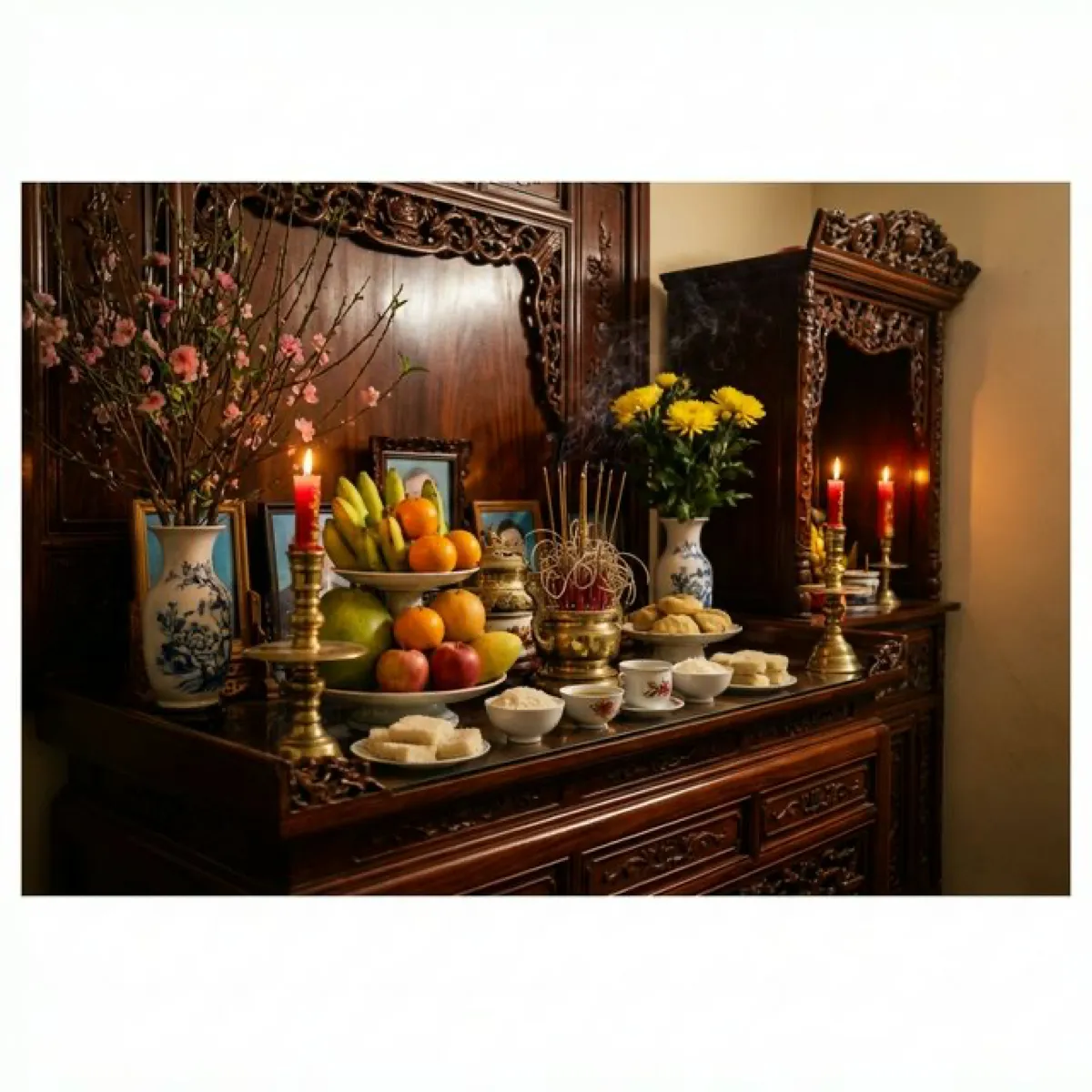
- Ancestor altar offering: A full feast is prepared on the family altar: rice, chicken, pork, fruit, incense, flowers
- Incense lighting: The head of household lights three incense sticks and invites ancestral spirits to return home for Tet
- Fireworks/firecrackers: The noise scares away evil spirits (officially replaced by government firework displays in Vietnam)
- First moments: The family gathers, exchanges wishes, and drinks tea together
First Footer (Xông Đất)
This might be the single most important Tet belief. The first person to enter your home after midnight, called the "xông đất" person, determines your family's luck for the entire year.
The ideal first footer:
- Has a zodiac sign compatible with the household head
- Is healthy, successful, and cheerful
- Has not experienced any recent tragedies
- Preferably male (traditionally, though modern families are more flexible)
The worst first footer:
- Someone in mourning
- Someone who recently lost money or had an accident
- Someone whose zodiac clashes with the homeowner
Strategic tip: Many families pre-arrange their first footer by inviting a trusted friend or relative who meets all the criteria to arrive at a specific time. Nothing is left to chance.
(The direction you step out also matters. Learn more: Auspicious Departure Days 2026)
The Three Days of Tet
Mùng 1 (Day 1): Family Day
The most sacred day. Families gather at the eldest member's home. Children wear new clothes, bow to their elders, and receive red envelopes (lì xì) containing lucky money.
Key activities:
- Visit parents and grandparents
- Eat vegetarian breakfast (in Buddhist families)
- Visit pagodas to pray for blessings
- Exchange Tet greetings: "Chúc Mừng Năm Mới" (Happy New Year)
Things to AVOID on Mùng 1:
- ❌ Sweeping the floor (sweeps away luck)
- ❌ Washing hair (washes away fortune)
- ❌ Breaking anything (symbolizes broken relationships)
- ❌ Lending money (drains wealth for the whole year)
- ❌ Wearing black or white (funeral colors)
- ❌ Arguing or crying (sets a negative tone)
- ❌ Saying unlucky words (death, hospital, broken)
Mùng 2 (Day 2): In-Laws Day
Traditionally, married couples visit the wife's parents on Mùng 2. This balances the respect shown to the husband's family on Mùng 1.
Mùng 3 (Day 3): Teacher's Day
Students visit their teachers to show gratitude. In modern Vietnam, this is also a day for visiting friends and extended family.
Tet Food: What Every Dish Means
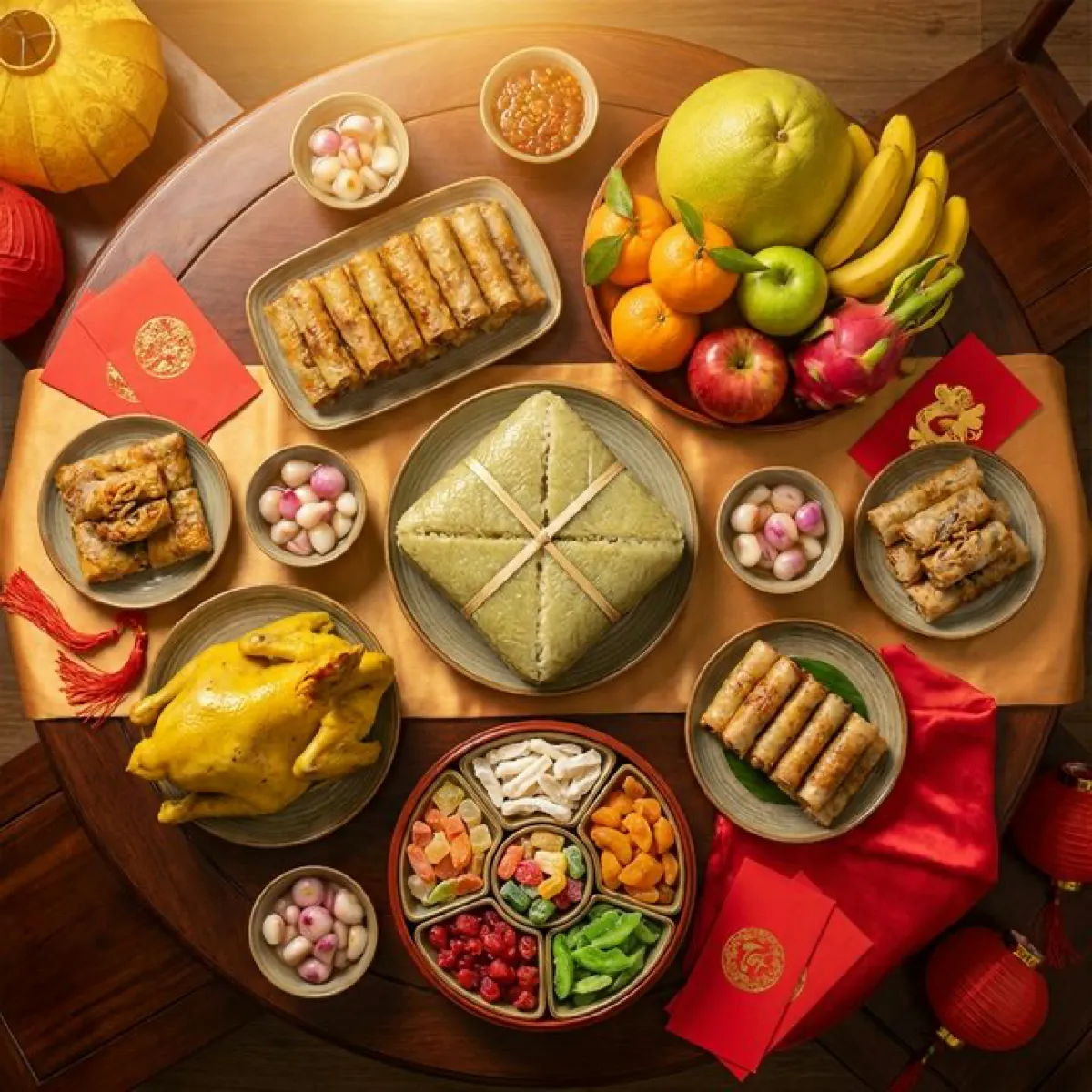
Vietnamese Tet food is never random. Every dish on the table carries symbolic meaning:
| Dish | Vietnamese Name | Meaning |
|---|---|---|
| Square sticky rice cake | Bánh chưng | Earth; gratitude to ancestors |
| Cylindrical sticky rice cake | Bánh tét | Southern variant of bánh chưng |
| Pickled onion | Dưa hành | Patience; balance with rich foods |
| Dried candied fruits | Mứt Tết | Sweet year ahead |
| Pork and egg stew | Thịt kho tàu | Warmth and unity |
| Spring rolls | Nem / Chả giò | Wealth (shaped like gold bars) |
| Whole boiled chicken | Gà luộc | Prosperity and completeness |
| Watermelon | Dưa hấu | Red inside = luck |
| Five-fruit tray | Mâm ngũ quả | Five elements in harmony |
Cultural insight: The five fruits on Mâm Ngũ Quả vary between North and South Vietnam, but they always represent the Five Elements (Metal, Wood, Water, Fire, Earth) in balance.
Red Envelopes (Lì Xì): The Rules
Red envelopes are exchanged during the first days of Tet. But there are unwritten rules:
- Always give NEW bills: old, crumpled money is disrespectful
- Even amounts: Vietnamese tradition favors even numbers for gifts (unlike Chinese tradition which avoids 4)
- Don't open in front of the giver — that's considered rude
- Elders give to children, but children also give to elderly grandparents (different significance)
- Amount doesn't matter: the gesture and the red envelope itself carry the luck, not the amount inside
Common Tet Superstitions
| Superstition | Explanation |
|---|---|
| First purchase of the year | Whatever you buy first "sets the tone" — buy something valuable |
| Eating certain fruits | Coconut (dừa) = excess; Papaya (đu đủ) = enough; Mango (xoài) = spending → Avoid mango |
| Number of incense sticks | Always odd numbers (1, 3, 5) — even numbers are for funerals |
| Clothing colors | Red and yellow attract luck; black and white repel it |
| Return borrowed items before Tet | Starting the year in debt attracts more debt |
Tet as an Overseas Vietnamese
For the 5.3 million Vietnamese living abroad, Tet is both nostalgic and challenging. You can't always fly home, and your neighborhood doesn't transform into a sea of red and gold.
How to celebrate Tet abroad:
- Set up a small ancestor altar — even a photo, incense, and fruit on a table counts
- Cook at least one traditional dish — bánh chưng, thịt kho, or chè
- Call family in Vietnam at midnight (their time)
- Wear áo dài if you have one — even just for a photo
- Visit a Vietnamese temple or community center — most overseas communities organize Tet festivals
- Use MoonLich to check the exact Tet date, auspicious hours, and zodiac forecasts in your timezone
Frequently Asked Questions
How long does Tet last?
Officially 3 days (Mùng 1-3), but the festive season runs from about 1 week before to the 15th of the 1st lunar month (Rằm Tháng Giêng). Most workers get 7-9 days off.
Can non-Vietnamese celebrate Tet?
Absolutely. Tet is a cultural celebration, not a closed ceremony. Many foreigners living in Vietnam participate enthusiastically. Just follow the basic rules: bring fruit or gifts when visiting homes, dress appropriately (avoid black/white), and say "Chúc Mừng Năm Mới."
What's the difference between Vietnamese and Chinese Lunar New Year?
The dates are usually the same, but traditions differ significantly. Vietnam has unique foods (bánh chưng vs nian gao), uses peach blossoms instead of plum blossoms, and features the Cat in the zodiac where China has the Rabbit.
(Deep dive: Lunar vs Solar Calendar Differences)
When is Tet 2027?
Tet 2027 (Year of the Goat / Đinh Mùi) begins on February 6, 2027. Read the full guide: When is Tet 2027?
Final Thoughts
Tet is the heartbeat of Vietnamese culture. Past and future sit together at the same table, ancestors beside grandchildren, every action carrying hope for a better year ahead.
No matter where you celebrate (Saigon, San Jose, or Sydney), understanding these traditions turns Tet from a confusing holiday into a rich, meaningful experience.
Navigate your Tet with confidence → MoonLich - Vietnamese Lunar Calendar
Related readings:
- When is Tet 2027? — Exact dates and holiday schedule
- Vietnamese Zodiac Animals — Which animal are you?
- How to Choose Auspicious Days — The 5-step Feng Shui guide
- Feng Shui 2026 — Master the Year of the Fire Horse